How to Communicate a Property Management Change to Residents in NYC Co-ops and Condos
Your board has made the decision.
A new property management firm has been selected. The transition is underway.
Now comes the part most boards dread almost as much as the search itself.
Telling your residents.
It sounds simple. It rarely is. And how your board handles this communication shapes how the entire transition is perceived, by residents, by both firms, and by the building as a whole.
Why This Conversation Is Harder Than It Looks
Residents have a complicated relationship with property management changes.
Some will be relieved. If the old firm was unpopular, residents may feel like the board finally did something. Others will be anxious; change in a building creates uncertainty, and uncertainty makes people uncomfortable. A few will be annoyed, especially if they had a good personal rapport with the departing manager.
And some will smell an opportunity to raise every grievance they have ever had, now that there is movement. Don’t feel stressed out about the chronic “complainers,” every building has a few of them.
Your job as a board is not to manage everyone's feelings. It is to communicate clearly, maintain trust, and keep the building stable while the transition happens.
What to Communicate, and When
Before the transition officially begins:
Residents do not need to know the management firm is changing before it is finalized. Premature communication creates speculation, and speculation creates noise.
Once the decision is final and the new firm has been engaged, that is when you communicate, not before.
The initial announcement:
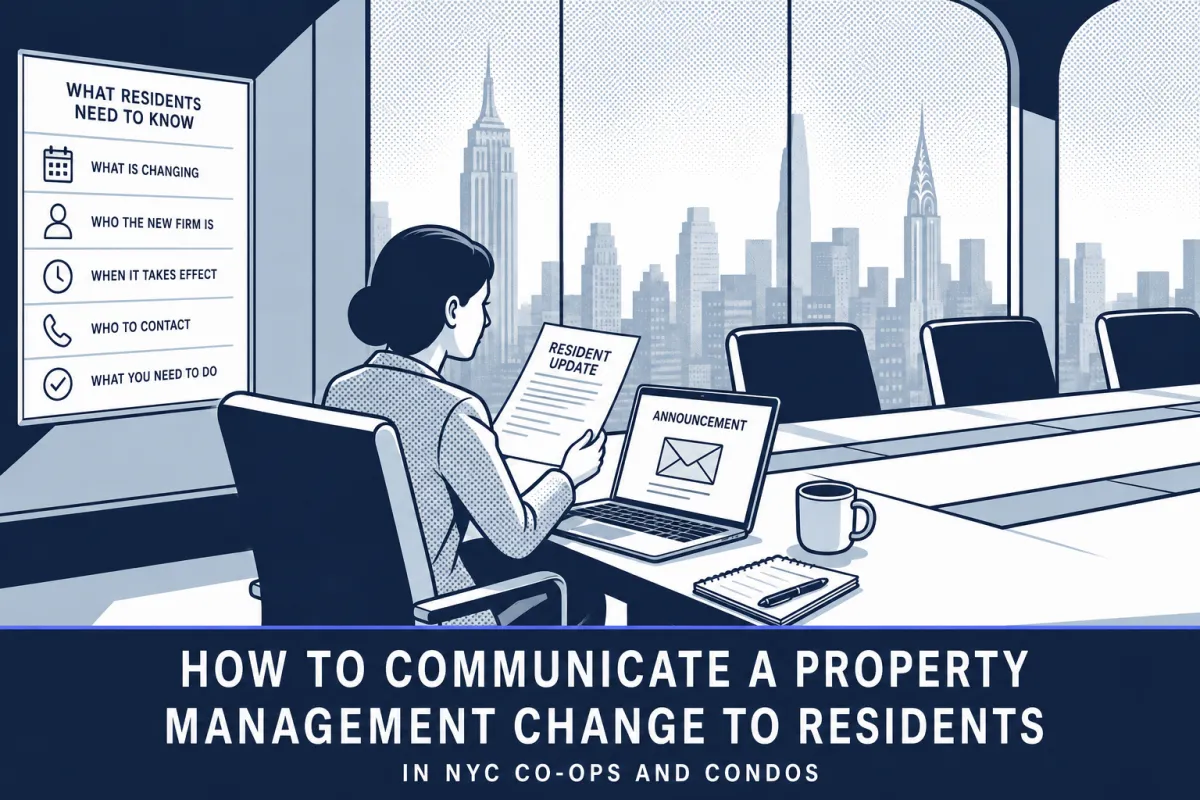
Keep it simple, professional, and forward-looking. Residents do not need the backstory of why you made the change. They need to know:
That the management firm is changing
Who the new firm is
When the change takes effect
Who their point of contact will be going forward
What, if anything, they need to do (usually only new payment instructions)
A short, clear letter or building-wide email covers this well. This is not the moment for a detailed explanation of the search process or a list of grievances with the old firm.
During the transition:
This is when communication matters most, and when boards go quietest.
Residents will notice if things feel uncertain or disorganized, even small things, like a new phone number that is not working yet, or a portal they cannot log into. Get ahead of those details. Send an update midway through the transition that confirms the new firm is up and running and provides the updated contact information clearly.
Unless the board prefers to communicate with residents yourself, this can be handled by the new property manager.
After the transition:
A brief follow-up from the board after the new firm takes over signals confidence. It does not need to be long. It just needs to say: we are up and running, here is how to reach the new management team, and we are here if you have questions.
What Not to Say
Do not explain why you left the previous firm in detail.
Even if the old relationship was genuinely frustrating, airing it publicly puts the board in a defensive position, can create legal exposure, and does nothing to help residents feel confident about the change.
Keep the focus on what is coming, not what went wrong.
Do not overpromise on behalf of the new firm.
Residents will hold the board accountable for anything that sounds like a guarantee. "Things will be much better" is a promise you cannot make on behalf of a firm that has not started yet.
Do not go silent.
The two most common board mistakes during a property management transition are saying too much too early, and saying nothing during the critical middle weeks. Silence breeds speculation. Keep the communication consistent and low-key throughout the process.
The Tone That Works
Confident. Calm. Forward-looking.
Residents take their cues from the board. If your communication sounds uncertain or defensive, they will feel uncertain. If it sounds clear and in control, most of them will follow that lead.
You do not need to have every answer to every question before you communicate. You just need to communicate honestly, and follow up when you do have the answers.
If your board is preparing for a management transition and wants guidance on how to structure the communication, let's talk. Getting this piece right protects the building, and the board's credibility, through the whole process.
Back to Property Management NYC


