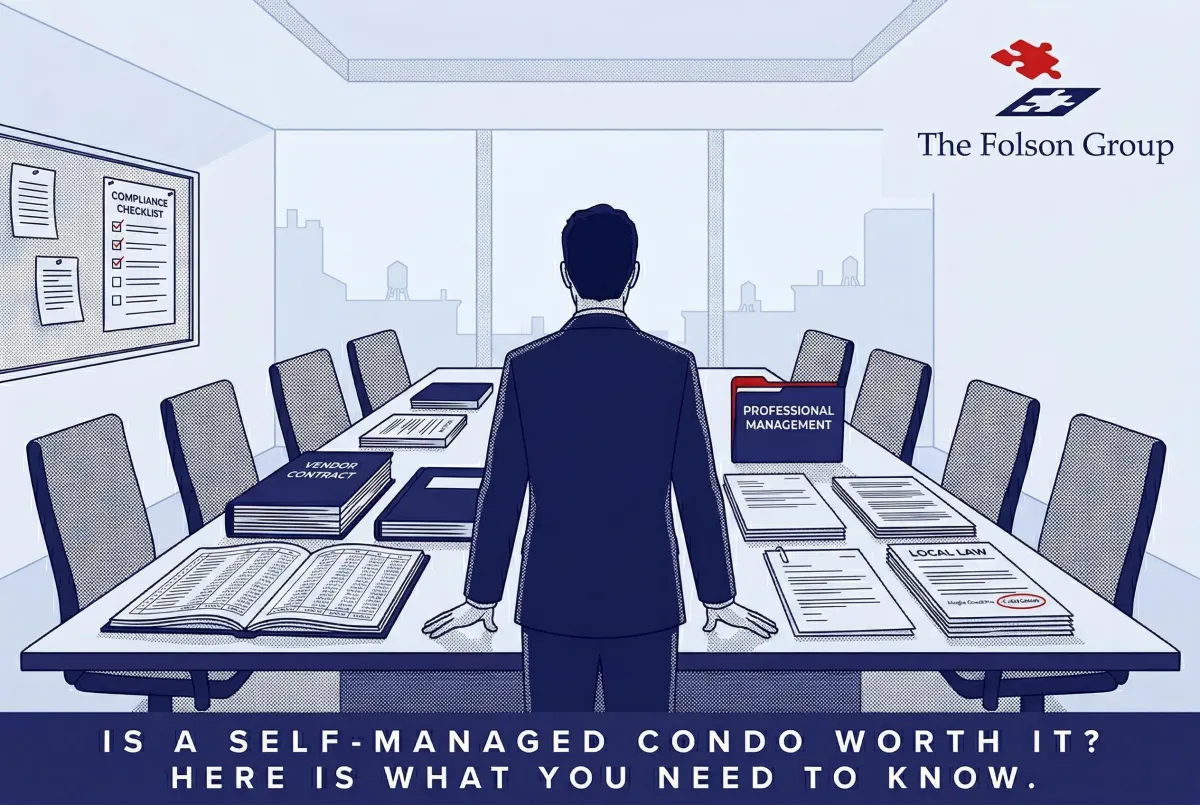
Is a Self-Managed Condo in Brooklyn Really Worth It? What Most Boards Don’t Realize
You thought you were joining the board to protect your investment…
not to take on a second full-time job.
But somewhere between chasing invoices, handling complaints, and trying to keep up with compliance deadlines, that’s exactly what it can start to feel like.
If you’ve ever looked at your management fees and thought, “We could do this ourselves,” you’re not alone. Many boards explore a selfmanaged condo model for more control, transparency, and cost savings.
The question is: are you gaining control—or taking on risk?
What Is a Self-Managed Condo?
A selfmanaged condo means your board takes over the responsibilities typically handled by a property management company.
That includes:
Financial management
Vendor coordination
Compliance tracking
Resident communication
Emergency response
In the world of Brooklyn Condo Property Management, this isn’t a small tweak—it’s a complete operational shift.
And it can either make your building more efficient… or quietly create chaos.
The Real Pros of a Self-Managed Condo
1. Lower Costs (At First Glance)
Cutting management fees is usually the starting point.
And yes, on paper, it looks like savings.
But in practice?
One missed filing, one poorly negotiated contract, or one delayed repair can wipe that out quickly.
2. Faster, More Direct Decisions
No more waiting on a managing agent.
Your board has full control, which can speed things up significantly and eliminate communication bottlenecks.
3. Stronger Engagement from Residents
When decisions are made in-house, people tend to care more.
You often see stronger involvement and a tighter sense of community.
The Cons Most Boards Underestimate
1. You’re Taking On a Full-Time Operation
This is where things get real.
Brooklyn Condo Property Management includes:
Local Law compliance
Budgeting and reporting
Insurance oversight
Vendor management
Resident issues
Emergencies
That’s not a side task—it’s an operating system.
2. Compliance Isn’t Forgiving
NYC regulations don’t give second chances.
Deadlines get missed. Filings get delayed. Fines follow.
Management companies have systems for this.
Most selfmanaged condo boards don’t—at least not at first.
3. Burnout Is Inevitable Without Structure
What starts as “we’ve got this” often turns into:
Endless emails
Constant decision-making
Frustrated residents
Board members stepping down
And once key people leave, everything becomes harder.
4. No Systems = No Consistency
Good management isn’t just people—it’s process.
Without systems:
Tasks fall through the cracks
Knowledge disappears with board turnover
Accountability becomes unclear
That’s when small issues become expensive problems.
So… Is It Actually Worth It?
Here’s the honest answer: sometimes.
A selfmanaged condo can work if:
Your building is smaller
Your board has relevant expertise
You’re willing to implement real systems (not just good intentions)
But for many buildings, the hidden costs—time, risk, and burnout—outweigh the savings.
That’s why the smartest boards don’t just ask,
“Should we self-manage?”
They ask,
“How do we stay in control without taking on everything?”
Final Thought
It’s to run it like a business.
Wanting control makes sense.
Wanting efficiency is smart.
But taking on everything yourself? That’s a bigger move than it looks.
The goal isn’t just to manage your building.
If you’re considering a selfmanaged condo—or already in one and feeling the pressure—let’s talk.
You’ll walk away with a clear path that protects your time, your building, and your investment.


