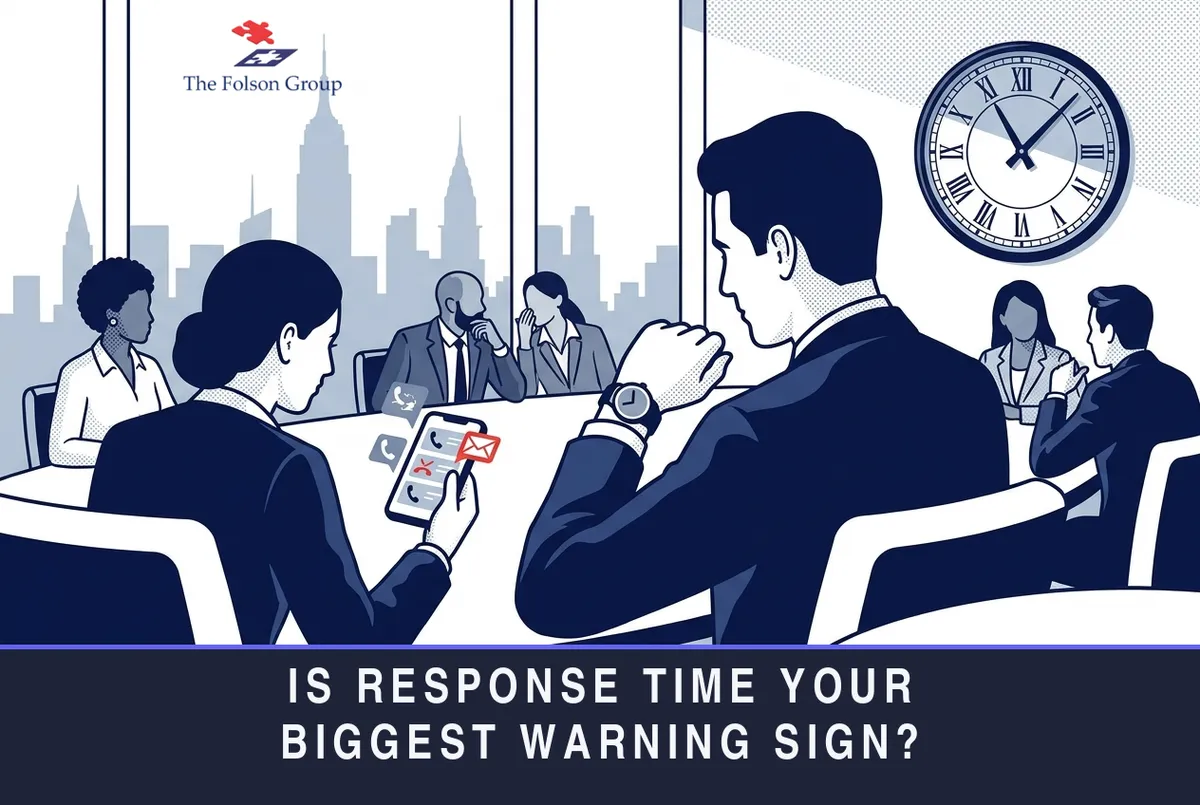
Why Your Property Manager's Response Time Is the Most Important Warning Sign in NYC
Every board has experienced it.
You send a question on Tuesday. Come Friday, nothing.
You tell yourself it is probably a busy week. You follow up on Monday. Still nothing.
You eventually get a response, but it is vague, it does not fully answer what you asked, and it takes another round of back-and-forth to get to the actual information you needed.
Meanwhile, three other things have piled up that also have not been addressed.
Most boards treat this as an annoyance. A quirk of the relationship. Something to work around.
It is not. It is a warning sign, and one of the most reliable ones there is.
Why Response Time Tells You So Much
A property manager's responsiveness is not just a communication preference. It is a window into how they are operating.
When a managing agent responds quickly, it tells you they are on top of their accounts. They have the bandwidth to stay on top of your building. Issues are being tracked. Nothing is falling through the cracks.
When response times are slow and inconsistent, it usually means one of a few things:
They are overextended. The most common cause. A managing agent carrying more buildings than they can handle will deprioritize response time, often without realizing it is happening. Your building is not being ignored. It is just not at the top of a very long list.
Your building is not a priority. Firms allocate attention based on account value, complexity, and relationship dynamics. If your building is on the smaller or lower-revenue end of their portfolio, response times may reflect that reality even when nobody says so directly.
Something has changed internally. Staff turnover, management restructuring, rapid portfolio growth, all of these create periods where service quality can slip. Boards feel it before anyone explains it to them.
The relationship is deteriorating. Sometimes, slow response is a passive signal. You don’t get the answers you need to make decisions, the managing agent thinks that you are difficult, and the relationship deteriorates. Not the most professional way to communicate friction, but it happens.
The Pattern to Watch For
A single slow week means almost nothing. Life happens. Firms have busy seasons.
What matters is the pattern.
Response times that gradually lengthen over weeks or months. Issues that keep getting kicked down the road. Board questions that get answered incompletely and require multiple follow-ups. Items that were discussed in a meeting and then never actioned.
That pattern is not a communication style. It is a performance problem.
And performance problems in property management almost never self-correct without intervention.
What to Do When You See the Pattern
Name it directly. Contact the managing agent and their supervisor and describe what you are observing, with specific examples and dates. Be professional. Be specific. Give them the opportunity to respond.
Reference your contract. Most management contracts include language about responsiveness. Find yours and read it. If there are specific standards in writing, you have a basis for a formal conversation.
Track what happens next. After you raise the issue, document whether response times improve, and for how long. A short burst of responsiveness followed by a return to the old pattern tells you something important.
Consider what the pattern is telling you about the broader relationship. Responsiveness is a symptom. The underlying question is whether this firm has the capacity and the commitment to serve your building the way it needs to be served.
The Harder Question
If your board has raised the responsiveness issue before, and things improved temporarily and then slipped back, it is worth asking honestly whether this is a fixable problem or a problem with the culture.
Some management firms simply have more buildings than they can serve well. No amount of direct feedback changes that reality.
If your board is at the point where you are not sure whether to push harder or start looking, let's talk. Knowing which one makes sense requires understanding the full picture, and sometimes an outside perspective makes that a lot clearer.
Back to Property Management NYC


